Wednesday, November 12, 2014

Reading with Rover - practicing reading with therapy dogs

Earlier this week, I was asked to give a talk to the Providence County Kennel Club about Therapy Dogs who are reading dogs. I thought it also might make a great blog post too. I think when most people think about therapy dogs, they automatically go to those dogs who visit the hospitals, nursing homes, and assisted living facilities. My first rottweiler was a certified therapy dog with Therapy Dogs International and he and I did visit an assisted living home every week. When he passed, I missed sharing my dogs with people in that way. So, when it looked like Lars would have what it takes to be a therapy dog, I went and had him tested in 2010. 


Why I chose to specialize in this "branch" of the Therapy dog program is Lars adores children. He connects with them and will give them his undivided attention, which is a great quality for a Tail Waggin' Tutor. Being a reading dog runs in Lars' family! His full sister who lives in Texas visits children in the schools there. Lars and I visit the local public library here in Warwick, Rhode Island. Our scheduled visits were weekly during summer break and during Christmas and Spring vacation. During those breaks was when there was the most interest in reading with Lars. Unfortunately, we took this summer off because Lars was rehabbing from a shoulder injury and was on strict crate rest for most of the summer. 

Tail Waggin' Tutors is the official name for the therapy dogs who visit schools and libraries for Therapy Dogs International. The premise behind the Tail Waggin' Tutors is to give children an listener who will not judge them on their reading skills. Dogs won't laugh at  or make fun of a child who struggles with a word, or stutters. The dogs lay next to the child and offer quiet and attentive support as the child practices their reading skills. Children will start to associate working on their reading skills as a positive experience  instead of an experience that will create anxiety of having to be perfect for the listeners. As the children spend more  time  reading, their ability and confidence can improve which will make them enjoy reading even more. One additional benefit is that interacting with a certified therapy/reading dog, children who are uncomfortable or fearful of dogs can have positive associations with these dogs can better understand dogs.

The Tail Waggin' Tutor program isn't only meant for children with reading difficulties. Children who just enjoy reading have read to Lars just because they love dogs or they wish they could have a dog but can't for whatever reason. Lars did have many "regulars" who could come every week or every other week to practice their reading skills. We even had a couple of "pre-readers" who just wanted to share their picture story books with Lars by showing him the artwork in the books like "Good Dog Carl."

 (That is one thing to expect when working with your dog as a Tail Waggin' Tutor, you and your dog will listen to every dog related book in the Library. The most popular series was one called Harry and Mudge where the main characters were a young boy and his English Mastiff named Mudge who weighed in at 182. Since Lars is a big dog himself, the readers all felt that Lars should listen to the adventures of a fellow big dog.)


 How a reading dog session would work was we would arrive to the library for time block for a little more than an hour. The children would sign up for 15 minutes of time during the week. The Warwick Library had us visit in a room off of the children's section for 1) privacy for the readers so they could practice reading to Lars without other children they didn't know present. 2) The time blocked could be respected and managed. The children had the option to sit in a chair and read a book to Lars or they could sit on the floor and read to him. Most chose to read in the chair and have Lars on the floor. Sometimes siblings, other relatives, or friends would come and share time blocks. The Parents were welcome to stay with their children when they read. Some stayed, some would leave the room and watch their other children in the library. Sometimes if the child had time left over, they could chose a short book or didn't want to keep reading, we would talk about Lars and other things he did outside of the library. Or, I would make him do some tricks, or they could sit , pet Lars and talk with him.

Reading to children was a rewarding to Lars as it was to me. I would say "Are we going to go to the library?" and he would get really excited about his "job". He would come into the library and make a direct path to the upstairs where the children's section is. Lars would make an effort to connect with the children the first couple of minutes of meeting them. He would kiss them and greet them in his own way. The first couple of minutes, both Lars and the kids would be all excited and then they would settle into reading time. Lars would do that with each new reader or group of readers who came in. I enjoyed seeing the regular kids on weekly or bi-weekly visits. It was really neat to see some kids who had confidence issues find their voices over the summer and go from reading in a small meek voice to reading out loud with enthusiasm. Some children who did have some significant issues with reading did read to us and it really made me grateful I could share my dog with them and give them a "safe and judgement free" environment to practice and try to improve their reading.

I'm hoping to get back to the reading dog visits with Lars this Christmas break. If you are looking for a career with your therapy dog, really consider doing the Tail Waggin' Tutor program if you are with TDI. Pet Partners (formally known as Delta) also has a reading dog program for their volunteers. If you need more information about pursuing therapy dog work, you can visit - Therapy Dogs International

Wednesday, October 22, 2014

If you show up....your dog will show up...

A lot of people ask me how do I get that attention and focus while heeling. I just got a message about it this

afternoon. I'll share a portion of what I wrote here:

Instead of drilling heeling as formal heeling, I would incorporate a lot of play and games with the heeling. I always tell people you want to be so cool to your dog, they will choose working with you than looking at what is the distraction. When they do pay attention to you, reward that...you want the dog to think they get a bigger payoff by looking at you than the stuff on the floor or the dog in their peripheral vision. When I taught the guys heeling...I kept heeling patterns very short, very dynamic, and very fun. I make a big deal out of heeling with attention with them and make it feel like they cured cancer with their heeling. LOL I always stopped working while they wanted to do more. My philosophy is to build the love for the work first and then polish with the precision. Does that make sense??

I like to think of this stuff like if I were a teacher. We've always had those teachers in high school or college who were as dry as dust....blah, blah, blah...reading from the text book is their lecture...asking the back row of the class to pay attention. You couldn't wait to get out of there if you showed up at all. Then we had the teachers who were so cool and fun....interactive with their lectures and examples of what they were teaching you. We all loved them and worked hard and studied hard for their tests...we were present for their class. We never missed the classes of the cool, hip and fun teachers. Training dogs is very much like this...what sort of teacher are you?? 


Monday, October 6, 2014

Goofing around with Go Outs

So I pulled "Go Outs" as one of Lars' obedience tasks earlier last week. My husband is up on the deck with O so I'm not talking to myself. LOL I use a target box at the top end of the ring for Lars' (and Ocean's go outs.) I didn't want the food on the ring gate to be the sole reason Lars is running away from me. I wanted to teach the go out as a position (like I do with front.) I could totally see him charge out there and wipe out the entire back ring gate searching for food that he is certain is there. With his drive, he won't stop looking for it until he finds the food. With running out to the position where the box is, I wanted Lars to know he has to run straight out away from me and get into the position the box is marking. In run thrus and practice, the box is always there...it's only gone in trials. Just like that plunger for the Broad Jump that's always there, it's there to build muscle memory to run straight and do a tight turn and sit. 

The way Lars thinks is the other reason I used this method over food...he understands that he must run away from me and get into this position in order to run back to me and take a jump. Running and jumping is one of Lars' most favorite things to do. Lars didn't "get" go outs until it started to get paired with Directed Jumping...and then it all made sense to Lars and why running to the opposite ring meant something. I actually use the directed jumping as a reward sometimes for a good go out. He only gets to jump if he is in the position I want. If he gives me a crap go out, he doesn't get to jump...and I have to become more of a stickler of that in run thrus. Ocean doesn't think like Lars does...and I'll probably have to adjust some of this when it's his turn to really learn this go outs and directed jumping. But, so far, it's working for Lars.


Thursday, October 2, 2014

Throwback Thursday...Epic Bitey Face Throwdown!


Once upon a time, I could pick Ocean... and Lars thought he was a boat load of fun to play with. LOL

Tuesday, September 30, 2014

What new, cool things from Train 'Em Tasks - Graduate Open Task Pack!

Here's the newest product to come down the Train 'Em Tasks pipeline - our Graduate Open Task Pack!


The AKC has a set of classes which are on the "Graduate" level of their obedience classes. They offer both Graduate Novice for those dogs who have earned their CD (Companion Dog) title but aren't quite ready for the Open obedience ring. They also have a Graduate Open class for dogs with their CDX (Companion Dog Excellent) but have more work to do before they enter the Utility obedience ring. These transitional obedience classes offer similar exercises to Open (for Graduate Novice) and Utility (for Graduate Open) but, those exercises are a little bit easier for the handler/dog team. Train 'Em Tasks does have a task pack for Graduate Novice already available to customers and I'll make a blog post about that at some point. Today, I'm going to focus on Graduate Open. ;) Both of the Graduate Novice and Graduate Open Task Packs are found in our Competitive Obedience Product section of our Etsy shop!


Graduate Open is a great stepping stone for dog/handler teams who in between Utility and Open in their showing career. In the Graduate Open class, the exercises are the same basic exercises that are found in the Utility ring: Signal Exercise, Scent Discrimination, Directed Retrieve, Moving Stand/Exam, and Directed Jumping. Unlike the Utility ring, Go Outs are a separate exercise on their own where in Utility, they are part of the Directed Jumping exercise. The title abbreviation for Graduate Open is GO and to earn that, you must qualify 3 times under 2 different judges, just like the regular obedience classes.

What makes the Signal Exercise different in Graduate Open versus Utility? A couple of things and you'll see that it's just a couple of small things with all of the exercises. To be able to pull off a qualifying score in Graduate Open, the dog and handler has to have a good grasp on the Utility exercises and be actively working towards the Utility ring. So, in the GO Signal Exercise, the heeling part is the same as UD Signal Exercises would be. But in GO, the handler may give the command and/or signal the dog to stand when told
by the judge. The handler will leave the dog and walk out about 10 - 20' and the judge will signal to down, sit, come, and finish.

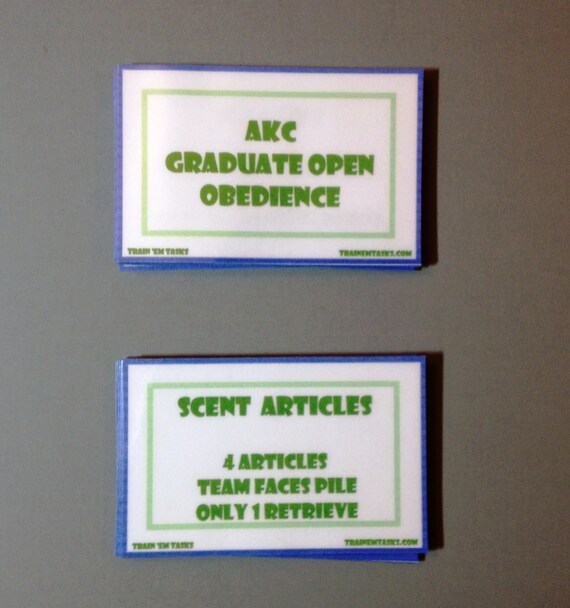
Scent Discrimination in Graduate Open is one article only and not two like the Utility ring. It is up to the handler if they will use a metal or leather article for the article the dog will bring back. The pile is made up of only 4 articles (2 metal and 2 leather) and the dog/handler team will stay facing the pile during the whole exercise. So,  there are some significant changes to the Scent Discrimination exercise to make it more doable for a Graduate Open team.

Directed Retrieve Exercise or as a lot of people call it the glove exercise has pivots and the same distance between the dog/handler team and the gloves as the exercise would in the Utility ring. The GO difference for the Directed Retrieve exercise is there is no glove 2 in the center. So, the dog and handler only has to worry about gloves 1 and 3 which are located in opposite corners of the top of the ring.

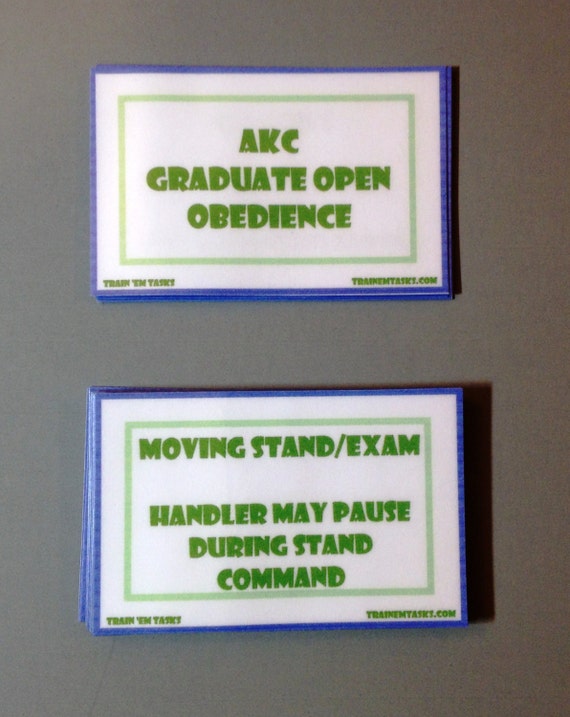
The Graduate Open Moving Stand and Exam is another exercise that is pretty darn close to the Utility Moving Stand and Exam. The dog and handler heel forward as told by the judge and when told to "Stand your dog." the handler may pause or hesitate when giving their dog their stand/stay command. Then they
must move forward 12' out and stand to face the dog. The rest of the exercise is performed just as it would in the Utility ring.

The Go Out Exercises...like I mentioned before, this is rolled into the Utility ring's Directed Jumping exercise. As the stand alone exercise in Graduate Open, it starts with the handler and dog in the middle of the ring in between the two jumps (sort of like where they would stand to do the glove exercise) and facing the top of the ring. The judge says "Send your dog" and the handler commands the dog to move away from them and go out about 20' past the jumps and there the handler is standing. When the dog reaches that distance, the handler will tell the dog to sit just like in Utility. The dog needs to stop, turn, and sit facing the handler and points wouldn't be taken off for non-square sits. Unlike the Utility Go Outs, the handler will go and return to the dog in heel position like they would in a stay.

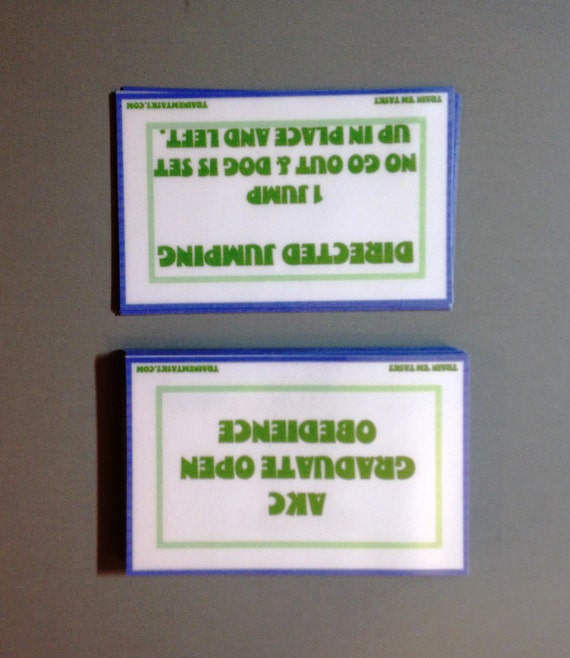
The last exercise in Graduate Open is the Directed Jumping Exercise. Since the Go Out is done separately from the Directed Jumping exercise in Graduate Open, the dog must be placed in position at the middle of the top of the ring by the handler. Just like in a recall, the handler will leave the dog and go to the middle in the opposite side of the ring and then face their dog. The judge will tell the handler which of the bar jump or high jump to send their dog over. Just like in Utility, the handler may turn towards the direct their dog is coming while the dog in the air over the jump. The dog has to front just like in a novice level recall and then finish. The GO directed jumping exercise is only one jump unlike Utility where the exercise is done only once.

If you and your dog are done with your CDX and are taking some time to prepare and train for the Utility ring but aren't quite there yet...Graduate Open is a good prep for the next step. I think that it could also be helpful for those handlers who have never set foot into a Utility ring before. Graduate Open might help those green Utility teams to work through some ring nerves for both the handler and the dog before hitting prime time in Utility A. So, if you're toying with the idea of getting your GO...GO FOR IT!! :D


Thursday, September 25, 2014

Train 'Em Topics! - The Why in Dog Training and Why It Matters:

           This post is derived from a photo I shared on my Facebook page a while back. I was going to make a cute comment about the photo which was a little kid standing next to a very large dog and it had its arm around the dog. There also was a quote from Orhan Pamuk which said "Dogs do speak, but only to those who listen."

     I had a moment in an agility class once that involved Ocean. He is much more environmentally sensitive than Lars is. He notices things that Lars typically doesn't give two hoots about. Sometimes those things bother him and that's something I've become more aware of. Anyway, Ocean doesn't usually have start line stay issues in the classes I have taken with him. But for the last run
Good Wait, Ocean... 
that night, I left him and headed out to where I wanted to lead out...when I got there, he was standing in place. He wasn't moving...but just standing. I went back and re-set him back in the sit and told him to wait. I did my lead out again and when I turned to look back at Ocean,  he was standing again. This was something that was different than what he had done before...when he does break his start line, he will start running. But, he was standing with a look on his face...and he was uncomfortable with something. It was like he was trying hard to stay but he was very uncertain. I looked up and just a couple feet behind O was another handler and dog playing a vigorous game of tug. I hadn't noticed them until I saw O's expression. Typically people standing behind a dog holding a stay can create a good bit of pressure and with some dogs, that can be unnerving enough to the point they break the stay. That pressure can be increased adding movement to that position behind the dog. The pressure that people is creating can be magnified the further and further the dog's handler moves away. A dog of Ocean's age (he has a year and a half old at the and experience, it doesn't surprise me he did what he did. I have not proofed a stay with Ocean with that much pressure (or much pressure at all at this stage of the game.) That is something we need to work on, especially as he does more and more obedience. But, I want to gradually expose him to increased pressure during a wait/stay  in a way that he is successful and confident when dealing with it. A dog of Lars' age and experience, I would expect them to stay despite a person and dog playing tug behind them.     So, I returned back to Ocean and set him back in a sit. I asked the lady who had been playing with her dog, if she could just hold off playing until Ocean left the start line. She was more than happy to do that and placed her dog in a sit. Ocean held his start line perfectly with them just standing right behind him. That sort of pressure was okay and the play was too much. Ocean was trying to tell me that and I listened.

     Dog do tell us stuff all the time in their behavior...but we as trainers should really listen to the message they might be trying to tell us. I distinctly remember thinking "Why is he doing that?" as I stood on the other side of a tire jump and a bar jump at class looking at my young dog standing when he should have been sitting. But, I'm the kind of trainer who likes to know the "Why." If I don't know the "why" behind incorrect behavior, then I can't really fix it.

    There are trainers who are in the mind set of "just fix it" and not bothering to know why is their dog doing what they are doing. There are trainers who don't like dealing with problems and will attempt to put a training band-aid on where they have weak spots in their performance and even their relationship with their dogs. Figuring out why your dog is behaving or performing incorrectly will get you to understand your dog on a deeper level. Sometimes, the problem doesn't lie with our dogs. Sometimes the problem lies with us and we need to put our handling under a microscope. Maybe we're not cueing the dog correctly, maybe we're not clean with our handling, or maybe we're not showing up the way we expect our dogs to show up in our training.

    I know they appreciate that you are listening to them. I saw that when I left Ocean for the third time with no one playing behind him. He was relieved that the pressure was gone and he could do his job. I know now it is a weak spot in our training and I have a game plan on how to address it.  If I had gone in and read him the riot act about not staying put, that wouldn't have been fair to him because we haven't proofed something like that. He's the kind of dog that if I had gone in and really corrected him for not being able to handle that sort of pressure...I would have put a huge dent our relationship and eroded that trust I'm trying to build between us. Ocean is more my husband's dog than he is mine and That was one of those times where "Oh, just fix it..." would have blown up in my face.

    Trying to figure out "the why" can be hard and it may not be a quick fix...but it will be worth it in your relationship with your dog and your performance in the long run.

Tuesday, September 16, 2014

Tasks Indepth: Agility - Angled Jumps

      I'm a little bit behind the 8 ball with making this post since I pulled this task card for Ocean on Thursday of last week. **blush** So, the agility task bag told me to break out some lines of angled jumps for Mr. O. Which is a good task for him since he's still trying to figure out what he needs to do to adjust his striding while coming down a line of jumps.


     This particular task card is from our Agility Jump Skills Task Pack. So, I again used my Nancy Gyes' Alphabet Drills book for my sequence muse and chose her "Z" drill but put my own spin on it. Ocean also has had some issues with gauging his striding on long, straight lines of jumps. He tends to get one speed going and won't deviate from that speed even if he needs to collect to get over a jump. He's big enough that he can take a bar down with barely noticing he's done it....or he's athletic enough that he can do some crazy bounce jumps with no stride to get over the next jump. Neither of those, I really want him to do. I ended up taking four jumps putting them into a straight line, at different angles, and at varying distances between the jumps.


The first time I sent Ocean through, the first jump was not a problem. But, he had built enough speed and momentum that he bounced (this means, he landed and the jumped from that spot with no running stride) between jump 2 and 3 and then flung himself over jump 4. Okay...not really what I was looking for. I've begun to teach Ocean a verbal collection cue which was unintentionally taught to Lars over the years of trialing and training. Lars' word for collection was "Easy." I've been using "easy" more and more with Ocean when I am decelerating and I saw that Thursday with this task card...he's actually starting to understand the verbal cue.

        I started Ocean over at the start of the line of jumps...and I used "easy" in the place where he started to think about bounce jumping. And, wouldn't you know it, he powered down a couple of notches and actually put in a stride between 2 and 3, chipped in nicely at the take off and got himself over jump 4 with control. I just about fell over. Just to make sure it wasn't a fluke, I sent him through again coming away from the house and used my easy command...and he was able to collect and put in a stride. Good Boy! So, I brought him down to what was jump 4 and made that jump 1 and ran towards the house. I wanted to see if Ocean could generalize what he had just done going the opposite direction. No...he didn't and he bounce jumped 2 and 3 again. No biggie. We went back to the new jump 1 and this time I had told him "easy" again before he entered jump 2 and 3...and he collected his stride and chipped in at take off. He is starting to understand that verbal collection cue!

      We spent the rest of this training session going through the 4 jumps with me changing the severity of the angles and the distances between the jumps so that way Ocean really had to think about what he was doing instead of becoming patterned to the same striding and angles. The "easy" cue was used each pass and he was listening and was changing his stride and not bounce jumping jumps. (I do have a bounce jumps task in the Jumping Skills Task Pack. That is more like a grid exercise to teach a dog to power from the rear to get lift over a jump. The jumps are set close together and there isn't room for a stride or two in between jumps. I just wanted to clarify why there is a time and a place for bounce jumping...this line of jumps O and I were working on here was not the time or the place.)

    I cannot tell you how happy I was that we ended up working this skill a couple of days before our USDAA trial this past weekend. Our P1 Starters Jumpers course was loaded full of jumps at funky angles. If we hadn't just worked this two days before, I probably would have had a stroke when I saw the course map. 


No joke...there were some of the same lines we had worked on in our backyard. With some well timed "Easy" cues and some other well timed "GO!" cues...that baby boy O nailed this course with a Q and a first place.

     Hopefully, this blog post will help give some ideas on how to work "Angled Jumps" when they get pulled out of your tasks grab bag!! Happy training everyone!!