Showing posts with label Dog training. Show all posts

Wednesday, March 30, 2016

Agility Jump Skills Task: Set Point Exercise

I am so bummed, I had done this task with the new slow motion feature on my iPad with the idea I would use the video clips in this blog post. But something odd happened because I'm still getting used to how things work with features like that...and the videos were uploaded to my computer without the slow motion intact. Ugh....so I have just regular speed clips of what the boys did with this exercise. I'm sorry about that. The next time I do this exercise, I'll upload the slow motion videos directly to YouTube from my iPad. Ugh.


The set point exercise is a simplified jump grid for agility dogs. I also am a firm believer that competitive obedience dogs who are preparing for Open and Utility would also really benefit from doing this sort of jump training. If you are seasoned in agility, then you might recognize this jumping exercise from Susan Salo and her jump grids materials. This is found on her Foundation Jumping DVD and her new book Jumping Grid Workbook . Both resources are available on Clean Run's website and I do recommend any of Salo's material. This agility task is part of our Agility Jumping Skills Task Pack and is available on our website: www.trainemtasks.com

The set point exercise is pretty much the only grid that will teach your dog the proper mechanics of getting themselves to lift off of the ground  and over a jump. There is no speed, there is no distance, and there is no influence from the handler on this one....it's just the dog jumping one jump. This grid really should be often as a dog is learning how to jump so they get used to how jumping correctly feels.

With the set point exercise there are two jumps, one's called the facilitator jump and the set point jump your dog is be jumping over. The facilitator jump can be a jump bump or a non-winged jump set at the height of about 4 - 6" depending on the height of your dog. This facilitator jump is never set higher than 6" or else the whole purpose of the set point exercise is lost. All the facilitator jump is defines the space that is available to the dog and more of less put them in the right place for take off. That space will cause your dog to step in, rock back on to it's rear, spring into the air and drop it's head while it's over the jump. The distance the facilitator jump is from the set point jump and the distance your dog is from the facilitator jump is dependent on how long your dog's back is.

The set point jump can be any agility jump you choose with the exception the broad jump. The height of the jump can be anywhere from low to your dog's competition height. Salo does recommend that when working with the set point exercise to change the height of the jump often so the dog will pay better attention to what the job at hand is.

On the other side of the set point jump is a target (that is easily seen by the dog) with a reward. It needs to be far enough away from the set point jump that the dog can finish it's stride after it's landed. This can be anywhere from 6 - 10' depending on the size of your dog.

And so what are you doing while your dog is working the grid? Not a whole lot to be honest. Where you stand is one step ahead of where the target is and one step away off to the side. This way your dog can get to the target and not charge ahead of you. (In the videos I'm going to be posting...I am not in the position because I wanted to show you what my dogs were doing from the side.) Make sure you switch sides of the target at your body is facing the same directions as your dog is heading.

Lars working the set point exercise:


Ocean working the set point exercise:


Tuesday, October 27, 2015

Train 'Em Tutorials - AKC Rally Sign #9: 270 Right


FINALLY!!!! The videos are back! Over the summer, my tripod I used to take these videos vanished. I have no idea where it went...like it was stashed in a place in this house that it will never see the light of day again. I've looked and looked all over the place and could not find it. I eventually resigned to the fact that it is buried someplace in the basement or maybe got left outside in a place that I just haven't thought of. But, I broke down and got a new one and the tutorials are back in business.

Enjoy!

Tuesday, October 20, 2015

Expectations versus maturity - Part 2

Since I made that blog post last week about online acquaintances struggling with younger dogs in performance sports...I've done some more thinking while off showing in agility over the weekend and have more thoughts on this.

The more I think about this notion of pushing the maturity issue with younger dogs and the parallel idea of people. (I'm not going down the Anthropomorphism rabbit hole here.)  None of us would expect a 12 - 14 year old kid to go and work successfully on Wall Street as a banker...or as an tax accountant...or a police or fireman. We don't expect 12 - 14 year old kids to be able to work college level calculus. Yes, there are some exceptional kids who could take on college level courses or actual jobs like scientists or law enforcement....but they are exceptional and few and far between. Why do we expect that same level of maturity of our younger dogs for them to work at the same level as a 5 - 7 year old dog??

I was joking with an agility friend earlier this summer that Ocean at 3 was like a 21 year old college guy. A 21 year old old college guy is a mix of great choices and not so great choices. And that in a nutshell, was Ocean this past year...a mix or good choices in the ring and a mix of not so great choices. At turning 4 years old in a couple of weeks, Ocean is more or less equivalent to a 28 year old guy and 28 year old men can be successful at holding down an actual job and making a whole bunch of great choice with maybe a not so great one thrown in for fun. I'm really looking forward to this upcoming year with my true adult dog in agility.


I think there's something to be said about being honest with where your young dogs are in their mental maturity. Yes, a 12 month old large breed dog looks like a grown up dog. But their brain is still in puppy land. So, if you have the 4 legged equivalent of a 12 - 14 year old kid, try to allow them to stay in middle school where they belong instead of trying to shove them into post doctorate work.

Tuesday, October 13, 2015

Is your dog training fluid? Or is it written in stone?

I was just on a dog message board discussing with dog agility with a couple of members. The core discussion was someone was struggling with their young 18 - 24 month old dog's behavior when training. He's a Cattle Dog/Rat Terrier mix and as she put it, he was going through some sort of teenage boy jerk-face stage. His behavior was becoming combative, not listening, brain falling out of his ears, and just being a jerk for the sake of being a jerk. She had a training session that left her in tears earlier this week. She said that there has been a lot of regression in their training as of lately. She admitted that she felt like giving up and wasn't sure where to in her training or how to get his brain back into some sort of thinking mode. I'll post some of my responses below (bold and in italics) and actually build a blog post out of them and some comments that will help that happen.

I do hate to say it, but....you can't rush or train maturity in dogs. It will come on their own schedule. Ocean is just now turning into the agility dog I have been waiting for him to be this year....at the age of 3. Next year....at 4, that will be the year it all comes together with Ocean. I started trialing him at 15 months old. We had a couple of rough years of NQ's after NQ's after NQ's.

Just keep at building experience and mileage with him. That's why I just kept trialing and training with O. All of that mileage does add up. Do the best you can...but keep in the back of your mind you have a young dog who needs to mentally grow up (and there's not anything you can do to speed that up.) Take your training day by day and you'll see small improvements over time.


I've been seeing this trend online a bit with message boards, on facebook, and in real life with friends who are struggling with younger dogs. Younger dogs who are living in the shadow of expectation of these peoples other dogs....both past and present. Or, they are living in the shadow friends' dogs of similar age who are consistently performing in classes, practice, or at trials.

On the dog message board another poster had commented that her dogs matured well at the ages of 3 to 3.5 years old. My final thoughts from the message board discussion are posted below and will close out this quick, impromptu blog post. I really would like people to really take this sentence to heart and think about this when they are working and training with their dogs:

"You need to be able to adjust your training plan to the dog that is in front of you at that moment....not adjust your dog to your training plan."

^^^ In my humble opinion, that skill right there, is what separates the masterful and great dog trainers from all of the other dog trainers.


This totally supports that saying in dog training - "You really don't have a dog until 3." In my experience, 3 years old is when the dog settles into itself and they have the mental maturity to handle the stress that working them causes. I started to trial Lars in agility until he was about 2 months shy of 3 and in obedience for his CD when he was a couple of months over 3. If I had started to trial him in either before 3....both sports would have been a hot mess. Lars really settled into himself between the ages of 4 and 5.

I do know there are dogs out there who are out there who are consistent and awesome at younger ages. But you absolutely cannot compare your dogs to other dogs....including your own. You're going to do nothing but get frustrated over why isn't my dog like so and so's dog or my other dogs. Because they aren't those other dogs....they are who they are. You just have to embrace who they are....and all of who they are, good and bad. You have work and train the dog in front of you. Some days you may only be able to work on simple, foundation things because your young dog can't think their way out of a paper bag. The next day, you might be able to do a sequence. You need to be able to adjust your training plan to the dog that is in front of you at that moment....not adjust your dog to your training plan.

Last night, Ocean was a little crazy practicing at home because it was cooler outside. He was forgetting the concept of collecting if I'm holding my place on the course and not go blowing by me. We went back to something that we haven't had to revisit in months - Calling him into heel after one jump. He needed that exercise at that moment...and we did it a bunch of times until he got his head together. I didn't get mad, upset, or frustrated because my dog who is a P2, Open/Excellent agility dog was blowing by me and we needed to go back to basic agility foundation 101. I did recognize that at that moment we needed to go a bunch of steps back in order to go forward last night. Training dogs is fluid...it's not always onward and upwards every training session. Sometimes it needs to flow backwards or stay stagnant because the dog in front of you needs that.

Monday, September 14, 2015

Dog training life lessons from the yoga mat.

I think life is full of lessons for us to learn. Most of them are subtle lessons that are easy to overlook or miss if you're not open to them. I actually had one of those lessons this week. Or, maybe it was more of a reminder than a real lesson. But I'll get to that lesson in a moment after a little bit of backstory.

Earlier this winter, I had seen my doctor and she suggested that I do some sort of physical activity every day. This was when I was just starting my self improvement journey and I was having some problems with getting some emotions under control. She felt that moving around would help with that. I dabbled with yoga with a couple of DVD's I had kicking around and playing around with the wii fit we had gotten years ago. Spring came and then I got busy with agility and going more outside. I had dropped the yoga stuff until this July and I really understood the idea of self care better. I found GaiamTV online, set up my subscription to it, and uncovered my yoga mat. I started out with doing a yoga practice a couple of times a week. Then that morphed into 4 - 5 times a week. Now the yoga practice has become the first thing in the morning ritual that I do at least 6 days a week now.

from bradleypjohnson

I have never been a flexible person...I was never a little girl who could do a handstand or a split. So, doing yoga has been a slow going progression of me being able to do different poses. Slowly over these weeks of my morning practice, I have noticed that I have gotten stronger in plank position and I can drop myself into chaturanga position to upward dog with control instead of plopping my stomach onto the floor. I can move from one pose to another without feeling like I'm going to fall on my head. I don't shake as much and I can do forward folds deeper without my hamstrings screaming in agony. Every day I step on to that yoga mat, I am 1% better than I was yesterday. So, let's get back to that lesson I started with.

"Keep looking for ways to keep improving that 1% each day."

There is a parallel between learning yoga and dog training (especially performance sports.) When you're starting out in yoga, most likely your body will not let you bust out some crazy advanced stuff like flying pigeon pose right out of the gate. Trust me, after 2 months of yoga, there are things I can do better...but there's a lot that I still struggle with at the beginner and low intermediate level. It's going to take me a long time for my body to be able to master the intermediate and advanced levels of yoga. And you know what, I'm okay with that because that is something I cannot control. That's not on my ego's time frame, that's on my body's time frame. So, for the mean time, I will just keep looking for ways to improve that 1% each day. (Just for clarity's sake....this blog post explains what I mean by the word "ego.")

Looking at dog training through this same lens...our ego's put a lot of dog training results on a time frame. You hear it all the time."I want to get ______ titles on my dog this year." "By the time my dog is ____ years old, they will have their _______ titles." "This dog will be my (OMG title) dog!" I will even admit that I have been guilty of letting my ego run rampant with prophecies of greatness Lars. Who's time frame is it really?? It's not really yours at all....it's really your dog's time frame. There's plenty of things in dog training that we cannot rush as trainers. If you do rush somethings, your performance will fall apart in the ring. I've seen that happen to people too and then they get angry at their dog they rushed instead of admitting they didn't take the time the dog really needed to be solid. It's those people who want to be at advanced levels of stuff before their dog's skill sets are ready to do it. My agility journey with Ocean has been very different this time around....especially this year. I celebrate being 1% better than we were yesterday or last week, or the last trial. Rottweilers tend to be a slow to mentally mature breed and being an intact boy doesn't help his cause. Sure, there are dogs who are younger than Ocean working in Masters level agility. But....their time frame is different than Ocean's time frame that is currently being controlled by his level of mental maturity. I have zero control of that....there's nothing I can do to make him mentally grow up faster. All I can do is keep training, keep building experience and mileage, and keep trialing and NQ'ing with him. But, everyday we get a little bit better just like me with my yoga poses. Instead of getting frustrated with what poses I can't do....I celebrate what I can do that I couldn't do 2 weeks ago. 
 
My journey with dogs is becoming very much like this. Instead of getting all bent out of shape about what we can't do....I celebrate what we did better, especially if it was something that we struggled with before. I would like to challenge everyone who is training their dogs (and this includes pet dog people too working on basic manners or tricks or whatever) to celebrate that 1% improvement you see every time you train your dogs....let go of your ego driven time frames because they will bring you as much disappointment as you think they will bring you happiness.


Wednesday, September 2, 2015

Now I have my task packs....where do I find stuff to do (Part 1)

I decided to make a small series of blog posts that talk about how and where to find things to work on for the various cards that make up the task packs. I get asked "How will I know what to train?" a bunch from people who are thinking about purchasing tasks or that are new to their Train 'Em Tasks task packs. This is probably the second most popular question Train 'Em Tasks gets asked after "Are there any description exercises on the back of the cards?" I'm going to share my resources I pull my training plans from when I pull my own task cards from their grab bags. I'll also share where to find these resources for your own library of training resources.

I do have a fairly vast library of training references - books, DVD's, magazines, agility course maps from trials, seminar notes, and websites that I regularly pull ideas from that will match the task cards I pull myself. I have never, ever intended the task cards to replace working with an instructor or attending a class for the various things the task card packs are based on. I do understand that there are areas of the world where training facilities, classes, and instructors are hours away from my customers. I live in New England and I'm very fortunate I have numerous dog training facilities/instructors within an hour to an hour and a half drive. I tend to forget that isn't the case for everyone. But, that being said, the task cards aren't going to help anyone who has no idea what the exercise is on the task card. They are not meant to teach the exercise...just help you choose what to work on that day. Eventually, I will be producing products that offer basic exercise descriptions much like the Rally Prep Packs for the various dog training avenues we have products for. (I can hear the cheers from Task Nation over that news. **grin**)

The first reference book for Task Cards I'm going to chat about is for Competitive Obedience...mostly because it was sitting right here next to my laptop. I have two other Competitive Obedience books I'll discuss over the next week or two. The Art of Proofing  by Adele Yunck is one of my go to books for coming up for new ways to change up my obedience training routine with Lars. Yunck is also the co-author of one of the other books I'm going to be talking about soon. I'll quote the back of the book:


"Many exhibitors skip the crucial step of proofing when preparing to show their dogs in obedience trials. During proofing, you expose your dog to more and more difficult distractions to teach him to maintain his concentration and complete the obedience exercises. This book will help you explore proofing, whether by training by yourself, with a helper, or in a group. Author Adele Yunck draws on her extensive teaching and trialing background as she explores this fascinating subject."

This is a book that I wouldn't really use for a dog that is just learning competitive obedience exercises. Proofing is meant to test a dog's understanding on an exercise. Proofing a dog who doesn't have a good sense of the what you are asking of it isn't that fair. It's fair to ask a dog it's understanding when it is no longer learning but practicing what you've taught it. Proofing, when done correctly, builds confidence instead of destroying it. This is why I tend to do a lot of proofing exercises with Lars in obedience and Ocean gets more in the way of games in new things he's learning. I'm testing if Lars truly knows his job and I'm building his confidence for when things may go weird in the obedience show environment. It's not fair for me to ask Ocean to work through a hard distraction when he is just learning the game. I'll destroy Ocean's trust in me and his confidence in obedience if I push too hard, too fast.


One other little caveat about this book...Yunck does discuss the use of verbal and physical corrections with proofing. The idea of corrections has become a taboo to some dog trainers. My view on corrections is when used appropriately and fairly, they are an invaluable way to communicate information to the dog. Yunck does discuss how she uses corrections fairly in the book and I feel that it does a great job of explaining the correct and fair way to use corrections (verbal and physical.) If the idea of using corrections in your dog training makes you uncomfortable, please do not discount this book. You can still find this book incredibly helpful for ideas to challenge you and your dog in your training.


What I really like about this little book is that she has it all broken down by each competitive obedience exercise from Novice to Utility. So, if you pull any Train 'Em Tasks competitive obedience task card...this book has you covered with a slew of different things to add to your training. The first part of the book, Yunck discusses basic proofing concepts...things like timing proofs, if your dog anticipates, proofing attention, adding people, and other things like that. She has suggestions for proofing exercises when you're training alone at home, if you're training with a friend, or if your training with a group of people. Yunck makes it easy to tell what proof is appropriate by using a graphic of 1, 2 or 3 people. For example, a proof you can do yourself - use large stuffed toys either on the ground or in chairs for your Figure 8 Exercise. (Believe me, this book is LOADED with single person proofs you can do yourself.) A type of proof you can do with a friend - have someone repeat "Finish!" to make sure your dog waits for YOUR command rather than moving on the judge's command. A sample of one of the group proofs - have several people  clap and cheer after your dog responds to each of your utility signals as this will mimic the happy and astounded crowd of non obedience people watching your run.


Along with the proofing for each exercises and their various pieces, Yunck also has a small overview of what the exercise is and what is expected of you in the obedience ring when doing those exercises. I like this information for people who may be new to the sport itself or who have never gone to Open or Utility before. She helps take away some of the mystery of what the ring procedure is for each exercise. It also helps so people can practice the exercises in a way they will happen in the ring as well.

If competitive obedience is the game you want to play with your dogs...this book is a must have in my opinion. I pull my task cards in the morning and then I thumb through this book looking for things to try as proofs. Lars gets bored with obedience exercises if they are done the same way every time we do them in the backyard. He's a dog who likes to think and use his brain...using this book accomplishes that. Some of the proofs, he sails through with flying colors. Other proofs, he really has to think about the job at hand and sometimes he does falter and gets something wrong. But faltering is honestly a good thing because then we get to work on something and build both my knowledge and his confidence and knowledge.

So....where to get this wonderful little reference book?? Click on the links below and it will take you to the different merchants who carry it. :)

Dogwise


Max 200


Amazon


Tuesday, August 25, 2015

From the Competitive Obedience Grab Bag - Go outs and directed jumping with Lars

Oh wow, I didn't anticipate not blogging for 10 days! Transcendent Trainers has seemed to take on a little bit of a life of it's own. I ended up just getting my butt in gear and moving forward on that much more than I thought I would at the start of it. The positive feedback I've gotten on the products thus far has pushed me to make it more of a sister site than just a section in the Tasks website. Now, you can find the Transcendent Trainer Gear at www.transcendenttrainers.com and I'm planning on adding new things with new designs on a regular basis. So, so, SO excited about that project.

Things have been a little bit quiet on the training front here these past 10 to 14 days. Summer has hit us for one of those weeks...we had a heat wave which will make me (and the guys) hide in my basement where it stays cool. When I have felt motivated to train at dusk, it's been short sessions just to give the guys something to use their brains. But there was one night that I did video Lars' obedience training session of directed jumping.

Lars and I have taken a good chunk of time off from serious obedience training after the beginning of May. We both needed a break from working so hard on getting that UD. Not to mention, May was the beginning of Ocean's agility trial season. So, I just shifted gears and let Lars be a dog for a couple of months while Ocean became my focus. I've started to bring obedience back to the front training burners again. Lars and I did an obedience run thru a couple of weeks ago and a few things were rusty, as to be expected.


That was the full gamut of  what was pulled the night I worked Go Out's and directed jumping. Some of you Task fans might remember that Lars had a soft tissue injury in his shoulder last year. He earned two UD legs back to back right before the injury sidelined him for 7 months. Before that injury, he had rocking go outs and he would sit in the middle of the ring. After this 7 month rehab, his go outs became very inconsistent. Sometimes he would run straight but more often than not, he would hook hard to the right and line himself up to the high jump. That was just points. It was fine if the high jump was the jump he had to take. But....not so much if he had to run across the ring and jump the bar. Sometimes he would run somewhat straight and sit just to the right of the middle stantion. I've done a ton of thinking about this whole issue....and I more or less have come to the conclusion that Lars has forgotten where his end target it or that he feels as long as he's someplace along the back fence, that's correct.

One thing that I had done before the injury was use a target box for Lars to run and sit in a target box sort of like a picture frame. It was out there all...the...time when Lars did go outs. But it was big and clunky and a royal pain to lug around to run thrus. So, after the injury, I naively thought we didn't need it anymore. That's where the door to interpretive go out positions opened up. After these 2.5 months off from obedience, the box is coming back....but in a different form. I'm going to use a collapsible yard stick that I can make any size for Lars' go out target....and it will always be there.


Cutie pie Lars exhibiting where he must sit when he must go "AWAY!"
I bought this yard stick after we got the UD and I hadn't used it much this summer. Lars seemed to think that he should sit just to the right of the "box". Nope....Lars, that's not what I'm looking for, pal. That has become his default position when he does head out back straight.


We spent some of our directed jumping task time working on the idea of  your butt must be in the box for me to click my clicker and you get treats. (See...this is again why there are no exercise descriptions on the back of the task cards. You work on what you need to do that day.) I am big, big fan of using clickers in training and this is a perfect application for it. Lars and I use clickers for me to get across EXACTLY what I am looking for him to do. And Lars is a funny guy....because he will do things incorrectly, sort of incorrectly, and correctly to figure out what I am actually looking for. It's like...he's processing it all himself with "If I sit here....nope, okay....how about here?? Nope again huh....let's go back to where I got that click....yup, alright. Let me try 3" over from here....nope. okay." I let him be wrong....because that's how he figures it out.


Raised bed veggie garden beds make great go out distractions...

In that training session, he figured out what I wanted: his butt squarely in that v-shaped box. Then I started to add some distance with each attempt....clicking and rewarding when he nailed it. And there was no click and no cookies when he didn't. We got to this point at the end of the training session which I was very pleased with!


One thing I have to also work on is getting Lars to mark the go out spot better. That was one thing I didn't teach because I didn't know better. We're going to be adding that to our things to do list when go outs or directed jumping tasks are pulled.

Obedience trial season will be ramping up for the fall soon and this will be my project for the next several weeks. I'm sort of looking at this as a re-train instead of fixing. But, I think this will help us with our "where exactly am I supposed to be" question that seems to pop up more often than I like in the Utility ring. I will be reporting on how this turns out for us. ;)


Wednesday, August 12, 2015

Transcendent Trainers

So...I've been playing around with something that I think could be really, really cool.

I notice that there aren't a lot of wearable things for us dog people that strengthen us as trainers/handlers. There are a ton of shirts and stuff out there that poke fun at us and our shortcomings... things that don't build us up. I know we've all seen shirts that say "Dog Wants New Handler." or "Great Dog, Shame About the Handler." If we wear those negative, self defeating messages...what does that say about what we really feel about ourselves?? Why do we project our negative self image to others around us and out to the universe?

I saw and bought that one shirt I got from a vendor at the USDAA New England Regionals that says something about believing in myself and my dog. The couple of agility trials I wore it to and after posting a chest selfie ofmy shirt, I had a bunch of friends say they needed that shirt or where could they get one. I went off and googled thinking I could locate it in a page or two. I was surprised to see that I couldn't find anything like that online. I found that actually disappointing.

Being the creative entrepreneur that I am, I set out to fix that.  I'm now offering clothing and gifts with empowering messages for us and our dogs on the Tasks site. I'm calling it "Transcendent Trainers."
http://www.trainemtasks.com/collections/transcendent-trainer


I have been asked about other styles of t-shirts like v-necks and long sleeves....unfortunately the printer that I am using in conjunction with my online store doesn't have those available. But, Zazzle does and I'm offering Train 'Em Tasks and Transcendent Trainers merchandise there too. http://www.zazzle.com/train_em_tasks


I see Transcendent Trainers becoming a sister site to Train 'Em Tasks...but that will come down the road in a couple of months. This is seriously just starting out and I have literally a ton of  transcendent ideas floating around in my head. I'm excited about it especially since I've been on my own big self improvement path this year.


Wednesday, July 29, 2015

Train 'Em Tutorials - AKC Rally Obedience Signs #7 and #8


The next installment of the Train 'Em Tasks Tutorials are the #7 and #8 signs in AKC Rally Novice. These two signs are the straight forward about turns - one to the right and the other to the left. I do talk about some troubleshooting where people can run into issues with the Left About Turn, like if your dog sits or has problems moving to the left because they don't have good rear end awareness.

Sign #7: About Right Turn - While heeling, the team makes a 180° about turn to the handler’s right. 

Sign #8: About "U" Turn - While heeling, the team makes a 180° turn to the handler’s left.

Sunday, July 26, 2015

Train 'Em Tasks Shop updates to make life easier for all...

Okay....I am laughing so hard at myself. For 3 months, I have been banging my head against the wall trying to figure out how to do drop down menus in the shop so finding stuff for you guys is easier. I just could not figure it out.

This morning? By sheer accident...discovered how drop down menus work. ROFLMAO!!!! So, now there's no more digging around the site to find what you're looking for!

And...I'm branching out into something fun: Train 'Em Gear you can wear!!! This will end up leap frogging into something else I have kicking around in my head that will come later this year.


Anyway, please come and check out the WAAAAAAYYYYYY easier to navigate website.
www.trainemtasks.com

Friday, July 17, 2015

Train 'Em Tutorials - AKC Rally Obedience signs #5 and #6

Even though I hadn't been blogging regularly, I had been doing the Train 'Em Tasks Tutorials for rally off and on. This video features signs 5 and 6 which are the left and right turns. Like with the other videos, I have the sign graphic and exercise description featured at the end of the video in case you're one of those types of people who need to see a how to in words too. Enjoy!!


Thursday, July 16, 2015

Spiritual gangsters and dog training

So, I will fully admit, the Tasks blog has been put on the back burner this spring while developing new products and working on a myriad of other things with the boys and even on myself.

That is where the title of today's blog post comes from...the hard work I have been doing on the inside. Long story short, I started to see a mental health professional almost a year ago now because there was a lot in my life that wasn't working for me. At the time, I thought it was burnout from my former day job with an undercurrent of depression. It infiltrated everything...work, personal life, and even the journey I walked with the boys. It wasn't until about 4 - 5 months into the sessions that we had a big break through...I wasn't burned out or clinically depressed. I was Codependent. What that means in a nutshell, I learned a lot of self defeating mental survival skills as a kid growing up in a dysfunctional household that I carried into and cling to as an adult. To quote Codependent No More, the book that has more or less redefined my life - "Codependency involves a habitual system of thinking, feeling, and behaving towards ourselves and others that cause us pain. These habits are self destructive." Codependent people worry about, obsess over, and try to control other people and events that are not our business to worry about, obsess over, and try to control. We enmesh ourselves in external things and people and detach from ourselves. Codependent people also have low self worth. We don't feel good about ourselves and we don't like ourselves very much. We tie our self worth to accomplishments and external things/events.

That has been my operating system for 40 or so years and removing that virus from my operating system is going to take some time. It's been slow going and I have had moments where its easier for me to fall back on familiar, old habits. But, it is getting better every day and I am putting one foot in front of the other on the path of codependency recovery. I'm working hard on detaching from everything that isn't my direct responsibility. The only thing I'm responsible for is me (isn't that a radical thought!) I'm working very hard on placing my own needs first and practicing self care (physically and emotionally.) I'm working very hard on developing the idea that what other people think of me is really none of my business. I'm letting go of all things that I can't control (which is everything but my own actions, feelings, and thoughts.) I'm becoming a spiritual gangster.


So....what does all of  have to do with dog training?? Actually, quite a bit. I know that I was taking dog training and the end goal of getting titles way too seriously for my own good. I see a lot of people who are in dog sports who also take dog training and getting those scores/titles way too seriously for their own good too. A dear friend of mine asked why I was driven by the need to be perfect...why was I so scared to fail or even make small mistakes? I would get defensive with instructors or friends who were trying to give me constructive criticism. They were trying to help me...but I took their input as attacks against my fragile self image. I couldn't process what they were trying to tell me in a healthy way. I couldn't process much of the world in a healthy way.

 With my new self awareness in place, I started to question why that was with me and speculated why that was with others too. I was basing my self worth on getting a Q or a title, or a great score. I worried way too much about what others thought about me as a person if I didn't Q, get that title, or that great score. Last year, agility caused me an incredible amount of angst because I could not Q with Ocean at 24" to save my life. Towards the end of the summer, I broke down at a trial and sobbed to friends saying "Why is this so hard?" My self worth took a huge tumble...I couldn't get my dog out of novice and I had been listening to advice from people. I wasn't listening to my own voice because of that poor self worth...I had detached from my own wisdom. It wasn't long after that agility break down that I moved Ocean back down to 20" to where he should have been. Wouldn't you know it, we're back to getting those Q's on a regular basis.

My new favorite dog sport shirt!!

Over these past couple of months with this new self awareness, I've learned where we are in our own head-space massively impacts training and working our dogs. We hear so much about the psychology side of sports and I don't think the obedience world has really looked at how that can impact their performance. The agility world's more competitive teams are aware of the mental game....but does the average agility team struggle with it? I surely didn't think that my everyday undercurrent of mental crap impacted how I trained or showed. But it did...and did a lot. I wasn't ready until now to really come out and talk about this recovery I'm working on. Now that I am ready, I'm probably going to write about it as it pertains to dog training.

If you see yourself in anything I wrote above, you're not alone. Codependency is a common issue for people who have lived/grew up with family dysfunction, alcoholism, mental illness, or abuse. Codependent No More by Melody Beattie is a life changing and validating book. I highly recommend it to anyone who knows or thinks codependency is part of their life.

Wednesday, April 29, 2015

Train 'Em Tutorials - AKC Rally Signs #3 and #4

Over the past couple of weeks, Ocean, Lars and I were able to video the next two signs in AKC Rally Novice. Sign #3 is the "Halt/Sit" sign and Sign #4 is "Halt/Sit/Down" sign. Both of these exercises are considered stationary exercises. I'm getting a bit more fancy with the editing of the videos. Now...at the end of the video, the sign graphic is shown as is the exercise description. 

Sign #3 - Halt/Sit


Sign #4 -Halt/Sit/Down


This past week, time slipped away since I was kind of more busy than I expected. The videos for the turns will start to be recorded this week! As always, if you have any feedback or questions regarding the Tutorials, please don't hesitate to drop us a note. :)

Monday, April 6, 2015

Train 'Em Tutorials - How to videos! AKC Rally Start and Finish

Last week, we launched a new feature for Train 'Em Tasks. For the longest time, I had been kicking around an idea of tutorial videos to help people do dog stuff at home. I started to get questions about the how of dog training and dog sports...and I would try to explain via email or private FB messages how to do various things. The longer I do Train 'Em Tasks, I am learning that not everyone lives in an area like Southern New England where I have access to several dog training facilities within an hour's drive of Tasks HQ. Most people do not have regular access to instructors or training facilities and they are left to try to learn things on their own. Or others may not have the funds to attend classes. And others may have other reasons that classes may not work for them. Once I figured all of that out, I decided that the tutorial videos were something that we needed to do.

I videoed our first one last week and posted it on our Train 'Em Tasks YouTube Channel. I decided to start with AKC (American Kennel Club) Rally Obedience Novice because that is a popular dog sport and most dog and handler teams find it fun and doable at any skill level. I will also post the videos here with some written commentary as well as the actual exercise description featured in the videos.

I will say one thing...we did get one comment on our Facebook Tasks Page which I feel should be addressed due to possible viewer expectations. One person felt the first video was tedious to watch. In this video. Lars and I demonstrated and talked about the Start and Finish signs found on an AKC rally course. I also talked about basics of setting your dog up into heel position and how to correctly place your reward for your dog. . If someone is pretty experienced in obedience or rally...some of these videos might be too basic for them to watch. My target audience are people who are new to the sport/dog training but want to do rally and don't have access to intro to rally classes. If you have lots of dog training experience, some of the Train 'Em Tutorials are going to be rudimentary. But, with that being said, I still encourage people who are experienced to check them out. Just maybe, there could be something in the videos that you might find interesting or helpful. I'm in the camp of we can always learn something...I, by no means, know everything and I'm always looking for new info to help me become a better handler. :)


 Here are the actual exercise descriptions for start and finish:

Sign #1: Start: Indicates the beginning of the course. The dogs does not need to be sitting at the start.

Sign #2: Finish: Indicates the end of the course - timing stops.

The next video we'll do will be Sign #3 which is the Halt sign. We're going to try to do these twice a week if we're not too busy and weather allows. Like I mentioned on the video...if you have questions or problems or comments, please send them to me and the boys. We might do some troubleshooting and problem solving videos too based on questions, problems, or comments. I think this will be a fun project for Tasks and it will help put faces and personalities behind the Train 'Em Tasks products too.

Saturday, January 17, 2015

Train 'Em Tasks in the classroom

When I started creating Train 'Em Tasks and its products, I assumed that they would be used by people training their dogs at home or by themselves. It wasn't long before task packs, prep packs and rally/BN sign packs were being purchased by professionals in dog training. I discovered then, that Train 'Em Tasks had a legitimate place inside dog training facilities.

One rally instructor had purchased the Train 'Em Tasks AKC Rally-O Prep Pack (which has sign images/descriptions, scoring and jump height regs) to use in her Intro to Rally Obedience class. With the beginning of each class, the instructor will pick out several of the cards in the prep pack and teach the differences between the similar signs. Or, she will choose a group of signs that require similar footwork and work on those that class. She uses the prep pack for herself to review signs when she's building a course. Then she carries around the prep pack while people are working on a rally course so she or students can read from the descriptions to clarify what each sign means when questioned about it in class.

Other trainers and facilities have purchased our full sized Rally Obedience and AKC Beginner Novice sign packs so they can offer run thru or drop in classes with courses for their customers. Another instructor uses both the full sized rally signs with the little rally task pack cards. They will pull several of the rally task cards so they get a random mix of rally exercises and then build their course from them. They don't get in a rut with using the same course maps over and over. 

Stranger approaching carrying an object at Rob Cary's

Rob Cary Pet Resort in San Antonio, Texas both uses Train 'Em Task products in their classes and also sells our training task packs and grab bags in their retail store! For their classes, they use the AKC rally packs, the WCR/APDT rally packs, AKC Beginner Novice pack, CGC pack, CGCA pack, and basic obedience manners task packs. Their instructor has the students pull the task cards at random and what exercises they pull from the bags are the exercises they work on for that class.
Rob Cary Pet Resort said it was a nice way to change up their classes. On occasion, they grouped some of the task cards together to create additional group challenges. For example, a dog and owner picked "Walking past distraction dogs." So, the other four dogs and owners did "PLAY" (with toys) - while the "Walking past distraction dogs" team worked on heeling around the dogs playing.  Their trainer notes each card drawn, then observes and offers critique and/or pointers to the students. 


Leave it! at Rob Cary Pet Resort
There have been trainers who specialize in private home settings for their clients and their dogs who have referred and/or purchased the task packs and grab bags. They find that the card packs make training on their own at home less intimidating and easier to get motivated since what they are going to work on is decided for them by the bag of cards. They have told me the bag of cards is fun for children who are involved with training their dog with their parents. Parents will let their kids pick the task cards and they stay involved with the training better. Breeders have also contacted me about using puppy training task packs as gifts for their new puppy owners. I know that isn't class room related but...hey, it will get the puppy and owner off on the right foot for training! :)

The Train 'Em Tasks in-boxes on Facebook, Etsy, and Gmail get questions on a regular basis from trainers all sorts of backgrounds. I've talked with 4-H level dog trainers, trainers who work with shelters and PTSD veterans who help train the dogs so they can be adopted out. With all of those trainers there is a place for Tasks products in their teaching environment. If Train 'Em Tasks is something that you would like to incorporate into your classes you teach or something that you would like to offer for retail sale to your customers, please feel free to contact me! I am more than happy to discuss wholesale orders with dog training facilities. I also do have a "professional trainer" coupon code on etsy. Just drop me a note and we can discuss that as well!


Wednesday, December 10, 2014

Lars' grand return to the Utility A show ring - so, so, so close!!!

Lars and I went back to the Utility A show ring for the first time after his 7 month shoulder soft tissue injury rehab stint this past weekend. Both days were so, so close with us NQing on the very last jump of directed jumping. He worked so incredibly (this video is from Sunday and was a 197 before directed jumping) and I'm beyond thrilled with him.


Here was the score break down for us: 1.5 points off in signals, 0 off 1st scent article, .5 point off second scent article, 1 point off directed retrieve, 0 off moving stand, NQ Directed jumping.

For those of you guys who aren't familiar with Utility. What should have happened with that directed jumping is Lars should have run away from me in a straight line and turned and sat directly opposite of me on the other side of the ring. The judge tells you which jump to go over. Then you repeat the exercise and the judge tells you to send the dog over the other jump. Lars is going to the place where he picked up the glove. Saturday, we had Glove 1 which lives in the opposite corner of the ring....and Lars went there instead of straight. No biggie...he needs some more go out mileage and proofing with directed retrieve versus go outs. It's really only been about 7 or 8 weeks since he's been back to work after all of that rehab.

We have two legs from this spring...just need one more!! There are a lot of shows coming up this winter...so we are going to get that last Q and soon. I just know it! Go Lars!!!!!

Wednesday, October 22, 2014

If you show up....your dog will show up...

A lot of people ask me how do I get that attention and focus while heeling. I just got a message about it this

afternoon. I'll share a portion of what I wrote here:

Instead of drilling heeling as formal heeling, I would incorporate a lot of play and games with the heeling. I always tell people you want to be so cool to your dog, they will choose working with you than looking at what is the distraction. When they do pay attention to you, reward that...you want the dog to think they get a bigger payoff by looking at you than the stuff on the floor or the dog in their peripheral vision. When I taught the guys heeling...I kept heeling patterns very short, very dynamic, and very fun. I make a big deal out of heeling with attention with them and make it feel like they cured cancer with their heeling. LOL I always stopped working while they wanted to do more. My philosophy is to build the love for the work first and then polish with the precision. Does that make sense??

I like to think of this stuff like if I were a teacher. We've always had those teachers in high school or college who were as dry as dust....blah, blah, blah...reading from the text book is their lecture...asking the back row of the class to pay attention. You couldn't wait to get out of there if you showed up at all. Then we had the teachers who were so cool and fun....interactive with their lectures and examples of what they were teaching you. We all loved them and worked hard and studied hard for their tests...we were present for their class. We never missed the classes of the cool, hip and fun teachers. Training dogs is very much like this...what sort of teacher are you?? 


Tuesday, September 30, 2014

What new, cool things from Train 'Em Tasks - Graduate Open Task Pack!

Here's the newest product to come down the Train 'Em Tasks pipeline - our Graduate Open Task Pack!


The AKC has a set of classes which are on the "Graduate" level of their obedience classes. They offer both Graduate Novice for those dogs who have earned their CD (Companion Dog) title but aren't quite ready for the Open obedience ring. They also have a Graduate Open class for dogs with their CDX (Companion Dog Excellent) but have more work to do before they enter the Utility obedience ring. These transitional obedience classes offer similar exercises to Open (for Graduate Novice) and Utility (for Graduate Open) but, those exercises are a little bit easier for the handler/dog team. Train 'Em Tasks does have a task pack for Graduate Novice already available to customers and I'll make a blog post about that at some point. Today, I'm going to focus on Graduate Open. ;) Both of the Graduate Novice and Graduate Open Task Packs are found in our Competitive Obedience Product section of our Etsy shop!
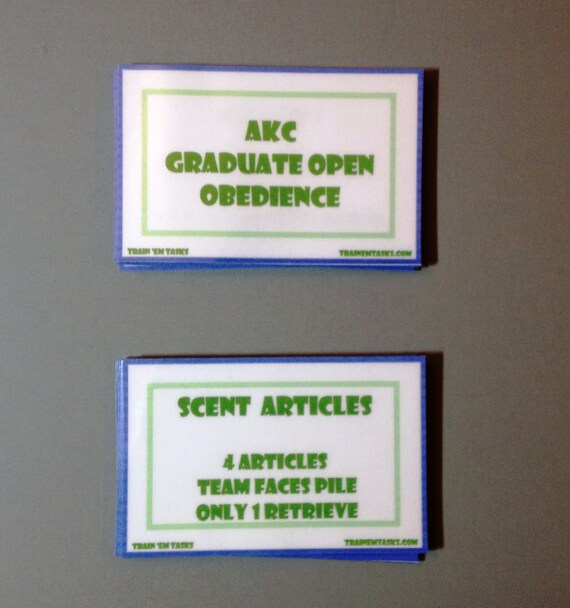

Graduate Open is a great stepping stone for dog/handler teams who in between Utility and Open in their showing career. In the Graduate Open class, the exercises are the same basic exercises that are found in the Utility ring: Signal Exercise, Scent Discrimination, Directed Retrieve, Moving Stand/Exam, and Directed Jumping. Unlike the Utility ring, Go Outs are a separate exercise on their own where in Utility, they are part of the Directed Jumping exercise. The title abbreviation for Graduate Open is GO and to earn that, you must qualify 3 times under 2 different judges, just like the regular obedience classes.

What makes the Signal Exercise different in Graduate Open versus Utility? A couple of things and you'll see that it's just a couple of small things with all of the exercises. To be able to pull off a qualifying score in Graduate Open, the dog and handler has to have a good grasp on the Utility exercises and be actively working towards the Utility ring. So, in the GO Signal Exercise, the heeling part is the same as UD Signal Exercises would be. But in GO, the handler may give the command and/or signal the dog to stand when told
by the judge. The handler will leave the dog and walk out about 10 - 20' and the judge will signal to down, sit, come, and finish.
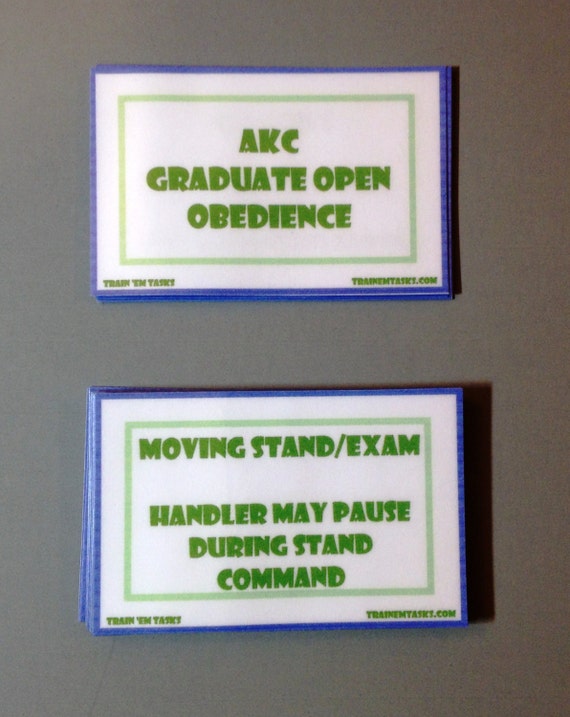
Scent Discrimination in Graduate Open is one article only and not two like the Utility ring. It is up to the handler if they will use a metal or leather article for the article the dog will bring back. The pile is made up of only 4 articles (2 metal and 2 leather) and the dog/handler team will stay facing the pile during the whole exercise. So,  there are some significant changes to the Scent Discrimination exercise to make it more doable for a Graduate Open team.

Directed Retrieve Exercise or as a lot of people call it the glove exercise has pivots and the same distance between the dog/handler team and the gloves as the exercise would in the Utility ring. The GO difference for the Directed Retrieve exercise is there is no glove 2 in the center. So, the dog and handler only has to worry about gloves 1 and 3 which are located in opposite corners of the top of the ring.

The Graduate Open Moving Stand and Exam is another exercise that is pretty darn close to the Utility Moving Stand and Exam. The dog and handler heel forward as told by the judge and when told to "Stand your dog." the handler may pause or hesitate when giving their dog their stand/stay command. Then they
must move forward 12' out and stand to face the dog. The rest of the exercise is performed just as it would in the Utility ring.

The Go Out Exercises...like I mentioned before, this is rolled into the Utility ring's Directed Jumping exercise. As the stand alone exercise in Graduate Open, it starts with the handler and dog in the middle of the ring in between the two jumps (sort of like where they would stand to do the glove exercise) and facing the top of the ring. The judge says "Send your dog" and the handler commands the dog to move away from them and go out about 20' past the jumps and there the handler is standing. When the dog reaches that distance, the handler will tell the dog to sit just like in Utility. The dog needs to stop, turn, and sit facing the handler and points wouldn't be taken off for non-square sits. Unlike the Utility Go Outs, the handler will go and return to the dog in heel position like they would in a stay.
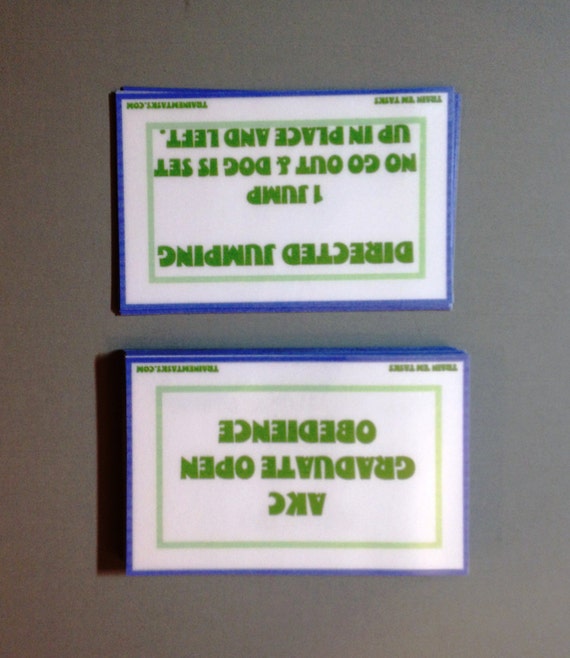
The last exercise in Graduate Open is the Directed Jumping Exercise. Since the Go Out is done separately from the Directed Jumping exercise in Graduate Open, the dog must be placed in position at the middle of the top of the ring by the handler. Just like in a recall, the handler will leave the dog and go to the middle in the opposite side of the ring and then face their dog. The judge will tell the handler which of the bar jump or high jump to send their dog over. Just like in Utility, the handler may turn towards the direct their dog is coming while the dog in the air over the jump. The dog has to front just like in a novice level recall and then finish. The GO directed jumping exercise is only one jump unlike Utility where the exercise is done only once.

If you and your dog are done with your CDX and are taking some time to prepare and train for the Utility ring but aren't quite there yet...Graduate Open is a good prep for the next step. I think that it could also be helpful for those handlers who have never set foot into a Utility ring before. Graduate Open might help those green Utility teams to work through some ring nerves for both the handler and the dog before hitting prime time in Utility A. So, if you're toying with the idea of getting your GO...GO FOR IT!! :D


Thursday, September 25, 2014

Train 'Em Topics! - The Why in Dog Training and Why It Matters:

           This post is derived from a photo I shared on my Facebook page a while back. I was going to make a cute comment about the photo which was a little kid standing next to a very large dog and it had its arm around the dog. There also was a quote from Orhan Pamuk which said "Dogs do speak, but only to those who listen."

     I had a moment in an agility class once that involved Ocean. He is much more environmentally sensitive than Lars is. He notices things that Lars typically doesn't give two hoots about. Sometimes those things bother him and that's something I've become more aware of. Anyway, Ocean doesn't usually have start line stay issues in the classes I have taken with him. But for the last run
Good Wait, Ocean... 
that night, I left him and headed out to where I wanted to lead out...when I got there, he was standing in place. He wasn't moving...but just standing. I went back and re-set him back in the sit and told him to wait. I did my lead out again and when I turned to look back at Ocean,  he was standing again. This was something that was different than what he had done before...when he does break his start line, he will start running. But, he was standing with a look on his face...and he was uncomfortable with something. It was like he was trying hard to stay but he was very uncertain. I looked up and just a couple feet behind O was another handler and dog playing a vigorous game of tug. I hadn't noticed them until I saw O's expression. Typically people standing behind a dog holding a stay can create a good bit of pressure and with some dogs, that can be unnerving enough to the point they break the stay. That pressure can be increased adding movement to that position behind the dog. The pressure that people is creating can be magnified the further and further the dog's handler moves away. A dog of Ocean's age (he has a year and a half old at the and experience, it doesn't surprise me he did what he did. I have not proofed a stay with Ocean with that much pressure (or much pressure at all at this stage of the game.) That is something we need to work on, especially as he does more and more obedience. But, I want to gradually expose him to increased pressure during a wait/stay  in a way that he is successful and confident when dealing with it. A dog of Lars' age and experience, I would expect them to stay despite a person and dog playing tug behind them.     So, I returned back to Ocean and set him back in a sit. I asked the lady who had been playing with her dog, if she could just hold off playing until Ocean left the start line. She was more than happy to do that and placed her dog in a sit. Ocean held his start line perfectly with them just standing right behind him. That sort of pressure was okay and the play was too much. Ocean was trying to tell me that and I listened.

     Dog do tell us stuff all the time in their behavior...but we as trainers should really listen to the message they might be trying to tell us. I distinctly remember thinking "Why is he doing that?" as I stood on the other side of a tire jump and a bar jump at class looking at my young dog standing when he should have been sitting. But, I'm the kind of trainer who likes to know the "Why." If I don't know the "why" behind incorrect behavior, then I can't really fix it.

    There are trainers who are in the mind set of "just fix it" and not bothering to know why is their dog doing what they are doing. There are trainers who don't like dealing with problems and will attempt to put a training band-aid on where they have weak spots in their performance and even their relationship with their dogs. Figuring out why your dog is behaving or performing incorrectly will get you to understand your dog on a deeper level. Sometimes, the problem doesn't lie with our dogs. Sometimes the problem lies with us and we need to put our handling under a microscope. Maybe we're not cueing the dog correctly, maybe we're not clean with our handling, or maybe we're not showing up the way we expect our dogs to show up in our training.

    I know they appreciate that you are listening to them. I saw that when I left Ocean for the third time with no one playing behind him. He was relieved that the pressure was gone and he could do his job. I know now it is a weak spot in our training and I have a game plan on how to address it.  If I had gone in and read him the riot act about not staying put, that wouldn't have been fair to him because we haven't proofed something like that. He's the kind of dog that if I had gone in and really corrected him for not being able to handle that sort of pressure...I would have put a huge dent our relationship and eroded that trust I'm trying to build between us. Ocean is more my husband's dog than he is mine and That was one of those times where "Oh, just fix it..." would have blown up in my face.

    Trying to figure out "the why" can be hard and it may not be a quick fix...but it will be worth it in your relationship with your dog and your performance in the long run.

Tuesday, September 16, 2014

Tasks Indepth: Agility - Angled Jumps

      I'm a little bit behind the 8 ball with making this post since I pulled this task card for Ocean on Thursday of last week. **blush** So, the agility task bag told me to break out some lines of angled jumps for Mr. O. Which is a good task for him since he's still trying to figure out what he needs to do to adjust his striding while coming down a line of jumps.


     This particular task card is from our Agility Jump Skills Task Pack. So, I again used my Nancy Gyes' Alphabet Drills book for my sequence muse and chose her "Z" drill but put my own spin on it. Ocean also has had some issues with gauging his striding on long, straight lines of jumps. He tends to get one speed going and won't deviate from that speed even if he needs to collect to get over a jump. He's big enough that he can take a bar down with barely noticing he's done it....or he's athletic enough that he can do some crazy bounce jumps with no stride to get over the next jump. Neither of those, I really want him to do. I ended up taking four jumps putting them into a straight line, at different angles, and at varying distances between the jumps.


The first time I sent Ocean through, the first jump was not a problem. But, he had built enough speed and momentum that he bounced (this means, he landed and the jumped from that spot with no running stride) between jump 2 and 3 and then flung himself over jump 4. Okay...not really what I was looking for. I've begun to teach Ocean a verbal collection cue which was unintentionally taught to Lars over the years of trialing and training. Lars' word for collection was "Easy." I've been using "easy" more and more with Ocean when I am decelerating and I saw that Thursday with this task card...he's actually starting to understand the verbal cue.

        I started Ocean over at the start of the line of jumps...and I used "easy" in the place where he started to think about bounce jumping. And, wouldn't you know it, he powered down a couple of notches and actually put in a stride between 2 and 3, chipped in nicely at the take off and got himself over jump 4 with control. I just about fell over. Just to make sure it wasn't a fluke, I sent him through again coming away from the house and used my easy command...and he was able to collect and put in a stride. Good Boy! So, I brought him down to what was jump 4 and made that jump 1 and ran towards the house. I wanted to see if Ocean could generalize what he had just done going the opposite direction. No...he didn't and he bounce jumped 2 and 3 again. No biggie. We went back to the new jump 1 and this time I had told him "easy" again before he entered jump 2 and 3...and he collected his stride and chipped in at take off. He is starting to understand that verbal collection cue!

      We spent the rest of this training session going through the 4 jumps with me changing the severity of the angles and the distances between the jumps so that way Ocean really had to think about what he was doing instead of becoming patterned to the same striding and angles. The "easy" cue was used each pass and he was listening and was changing his stride and not bounce jumping jumps. (I do have a bounce jumps task in the Jumping Skills Task Pack. That is more like a grid exercise to teach a dog to power from the rear to get lift over a jump. The jumps are set close together and there isn't room for a stride or two in between jumps. I just wanted to clarify why there is a time and a place for bounce jumping...this line of jumps O and I were working on here was not the time or the place.)

    I cannot tell you how happy I was that we ended up working this skill a couple of days before our USDAA trial this past weekend. Our P1 Starters Jumpers course was loaded full of jumps at funky angles. If we hadn't just worked this two days before, I probably would have had a stroke when I saw the course map. 


No joke...there were some of the same lines we had worked on in our backyard. With some well timed "Easy" cues and some other well timed "GO!" cues...that baby boy O nailed this course with a Q and a first place.

     Hopefully, this blog post will help give some ideas on how to work "Angled Jumps" when they get pulled out of your tasks grab bag!! Happy training everyone!!